Message Us
 Call Us
 Who Is Liable if Evasive Driving Leads to a Car Crash in Texas?
By Anderson, Cummings & Drawhorn, LLP on May 11, 2025
By Anderson, Cummings & Drawhorn, LLP on May 11, 2025

Table of Contents
If you’ve been injured in a crash caused by another driver’s sudden or misguided maneuver, you may be dealing with what’s known as faulty evasive action. This happens when someone tries to avoid danger—by swerving, braking hard, or making an abrupt move—but ends up causing a collision instead. Under Section 545.001 of the Texas Transportation Code, drivers must make these high-pressure decisions responsibly and within the law. When they don’t, the results can be serious—both physically and legally. These incidents unfold in an instant, and when multiple vehicles or road hazards are involved, determining fault becomes more complex. You may be entitled to compensation.
Here’s a more detailed explanation:
A driver might swerve into oncoming traffic, brake too late, or not react at all—turning a close call into a serious crash. These mistakes often come down to hesitation, poor judgment, or lack of experience, especially in high-speed or emergency situations where every second counts and the margin for error is incredibly small.
When a driver’s faulty evasive action causes or worsens a crash, they may be held legally responsible for the resulting damages. In Texas, fault isn’t based on what the driver intended—it’s about whether their response was reasonable given the circumstances. Insurance companies and courts look at whether the driver acted in line with standard driving practices and whether their evasive maneuver matched the level of threat. If not, they could be found liable for the accident.
Drivers should stay alert, anticipate hazards, and respond with smooth steering, appropriate braking, or acceleration to avoid or lessen collisions. Defensive driving training can be helpful in preparing for emergency scenarios, allowing drivers to make instinctive, calculated decisions. A well-executed evasive maneuver can prevent a collision altogether or at least reduce the severity of the impact, safeguarding not only the driver but also passengers and other road users.
Inadequate evasive action is another term for faulty evasive action. It often refers to insufficient or poorly executed maneuvers. These can include hesitation, overcorrection, or a failure to use turn signals, which adds unpredictability and can confuse other drivers. In legal proceedings, these actions may be scrutinized to determine if they contributed significantly to the resulting accident.
Understanding the nuances of faulty evasive action is essential, particularly in personal injury claims where liability must be clearly established. If you’re involved in a crash where evasive action played a role, consult our Fort Worth car accident lawyers to evaluate your options.
As a driver, you may need to take evasive actions in a number of circumstances. With so many vehicles on the road, you cannot know when another driver’s negligence could require you to make split-second decisions to try to avoid a crash.
Some familiar situations where you may need to take evasive action include:
Staying alert and driving defensively can help you prevent a crash by giving you more time to react. Looking away from the road for even a second could be the difference between avoiding a collision with another vehicle or driving down the road without incident.
Sometimes, despite your best efforts, you may not have sufficient time to avoid causing a crash. However, this is where things could get tricky. Even if another driver, such as a driver who swerves into your lane of traffic, caused the crash, the liable insurance company will try to shift blame to you.
As the injured victim in a car crash case, the burden of proving your claim is on you. This is exactly why you want a knowledgeable attorney working on your side. We know how to dispute insurance company arguments and work diligently to ensure you are not unfairly assessed with liability.
If Anderson, Cummings & Drawhorn, LLP handles your case, we will thoroughly investigate the crash scene and gather evidence on your behalf.
The insurance company has a different objective after a car crash involving one of their policyholders, which is to limit the amount of compensation paid. To accomplish this, they will also examine the crash scene with the primary goal of finding evidence of negligence on your part, such as:
If they find your actions contributed in any way to the crash, they can reduce what they have to pay you by the percentage of your fault.
If a driver fails to take any evasive actions and a crash occurs, he or she could be held at least partially liable for the damages. For example, say a car suddenly cut in front of you but you did not hit the brakes to even try to stop.
In those circumstances, you could be assessed with faulty evasive action because you did not apply your brakes or take other reasonable steps to avoid a crash.
In Fort Worth, as in all of Texas, we operate under a modified comparative fault rule. This law applies when at least two drivers are involved in a collision and both of them share a percentage of fault.
Under this law, a driver can be up to 50 percent at fault for a crash and still be eligible to seek some compensation to cover their losses. That said, drivers are still responsible for their percentage of the damages. This means that their percentage of fault will be deducted from any compensation they are awarded. If a driver is 51 percent or more at fault, however, he or she cannot recover any compensation at all.
Crash cases involving one driver having to take evasive actions are rarely straightforward. Going back to our earlier example of a driver swerving into your lane. If he or she did not hit any vehicle, including yours, it can be challenging to prove that individual was the cause of your crash. That is unless that individual pulls over and gives a statement about his or her involvement. More likely, the swerving driver will continue on down the road, as if nothing had happened.
Your best hope in that situation is to try to get something about that driver or his or her vehicle that can help police identify them. If that does not pan out, then you would have to look to other evidence to help prove your claim.
Evidence that could support another driver caused you to take evasive action include:
At Anderson, Cummings & Drawhorn, LLP, we have handled many types of crash cases. Our legal team knows what evidence is need to prove your case and, more importantly, how to get that evidence. We have the staff and resources to build a solid claim on your behalf, giving you the peace of mind you need.
After this or any type of crash, we strongly encourage you to seek legal help as soon as possible. Delays could limit your ability to recover compensation. There are state deadlines that apply and your attorney also needs time to properly prepare your case.
We are here to help, and there are no upfront costs to pay. Learn if you have legal options by requesting a free case review. Then, if you have a case and choose our firm, we can get to work on your behalf to recover full and fair compensation for your damages.
If you are in Dallas, Fort Worth or Arlington, our car accident lawyers are ready to help. Call (817) 920-9000 or fill out our Free Case Evaluation form now.

This page has been written, edited, and reviewed by a team of legal writers following our comprehensive guidelines. This page was approved by attorney Seth Anderson, whose team has more than 50 years of combined legal experience in helping victims of personal injury seek justice.
After a Fort Worth oilfield accident, you may be able to sue the contractor, the operator, or another company. Still, liability depends on who controlled the work, who created the dangerous condition, and whose conduct caused your injury. At Anderson, Cummings & Drawhorn, we know how complex oilfield accidents can...
Read Article
Grocery store slip and fall accidents are more serious than people think because they can cause serious injuries that may seem negligible at first. A sudden fall onto a hard floor can damage your head, spine, hips, joints, and other parts of your body, even when the fall initially looks...
Read Article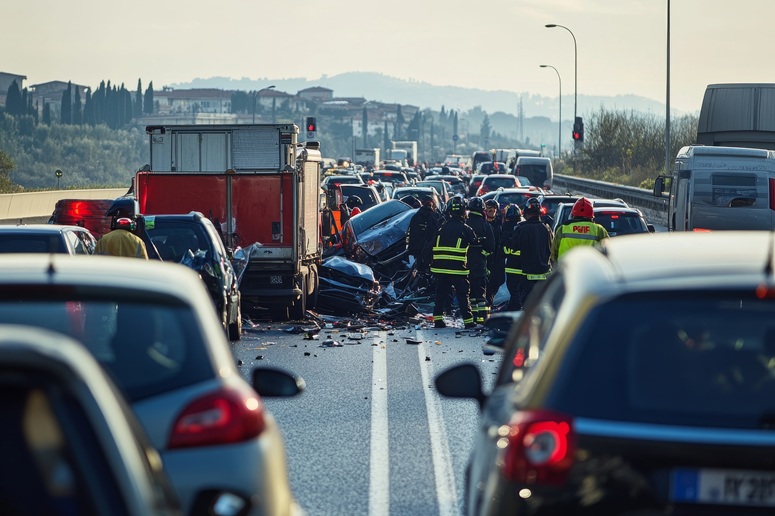
Multi-vehicle highway accidents in Fort Worth can cause serious injuries such as traumatic brain injuries, broken bones, spinal injuries, internal injuries, and severe soft tissue damage. You can be struck more than once as vehicles collide, increasing the force placed on the body. These crashes can occur on major highways...
Read ArticleTell us about your accident and your injuries. An injury lawyer from our team will call and provide you with a free evaluation of your case. If we can help, and you are unable to travel, we will come to your home, office, or hospital. It’s easy – let’s get started.

Email us anytime and we will get back to you.

Our attorneys will come to your home, office or hospital at your convenience.

Our team is ready and waiting to help you today.