Message Us
 Call Us
 What Is a Rolling Stop and Why Is It Illegal in Texas?
By Anderson, Cummings & Drawhorn, LLP on August 22, 2025
By Anderson, Cummings & Drawhorn, LLP on August 22, 2025

Drivers across Texas may not even realize they’re doing it, but what is a rolling stop? It’s when a vehicle slows down at a stop sign or red light but doesn’t completely halt before entering the intersection. It might feel like a minor shortcut, especially when there appears to be no cross-traffic. However, rolling stops are illegal under Texas traffic laws and can lead to serious consequences. At Anderson, Cummings & Drawhorn, LLP, we’ve represented countless clients injured in car accidents caused by rolling stops and similar violations. Understanding why this behavior is risky and what the law says can help you stay safe and avoid costly penalties.
Table of Contents
A rolling stop occurs when a driver slows down but fails to fully stop the vehicle at a designated stop sign or traffic signal. The car may come close to stopping, but if the wheels are still moving, it does not meet the legal standard for a complete stop. Many drivers may not realize that this small amount of movement still qualifies as a violation under Texas law. While it might seem harmless, it signals a lack of full control over the vehicle and reduces the driver’s opportunity to assess the intersection properly.
Texas law requires drivers to come to a full stop before entering intersections marked with stop signs or traffic lights. The stop must be complete—no rolling, creeping forward, or hesitation. The law applies even when there is no visible cross-traffic.
Stopping completely allows drivers to observe their surroundings, identify vehicles, pedestrians, or cyclists that may not be immediately visible, and make safe decisions. Failing to stop fully increases the risk of collision and is often seen as careless driving behavior contributing to avoidable car accidents.
Rolling stops may save drivers a second or two, but they sacrifice caution and control. Here are several risks:
Rolling stops put everyone at risk and increase the chances of a preventable car accident.
Some drivers confuse rolling stops with yielding, especially when no one else seems to be at the intersection. But the two are very different in the eyes of the law.
Under Texas Transportation Code Section 545.151, drivers approaching a stop sign must come to a full stop and yield to vehicles already in the intersection or close enough to create a hazard. Yield signs require a slowdown and a stop if necessary, but the obligation to fully stop applies only when conditions demand it.
In summary: At a stop sign, you must stop. At a yield sign, you slow down and stop only if it’s not safe to proceed.
Texas law treats rolling stops as traffic violations, which can lead to:
For drivers involved in car accidents, a rolling stop can be used as evidence of negligence.
According to Texas Transportation Code §544.010, a driver must:
There is no specific number of seconds listed, but the key is to come to a complete stop and ensure it’s safe to proceed.
Bicyclists in Texas are generally required to follow the same traffic laws as motor vehicle drivers. That means:
Yes, rolling stops are illegal for cyclists too.
Many people assume that because bicycles are smaller and more agile than cars, they’re allowed to maneuver differently through intersections. However, Texas law treats bicycles as vehicles, meaning cyclists must obey all traffic control devices, including stop signs and red lights. While states like Idaho have passed laws allowing cyclists to treat stop signs as yield signs—commonly referred to as “Idaho Stops”— Texas does not currently recognize this exception. Cyclists must come to a complete stop unless a police officer or traffic signal instructs otherwise. Failing to stop fully can result in citations, just as it would for a driver in a car. Moreover, rolling through a stop sign on a bicycle puts the rider at serious risk of being struck by another vehicle. All road users, regardless of their mode of transportation, are expected to prioritize safety and adhere to state traffic regulations.
Yes, you have the right to contest any traffic citation in court. Challenging a rolling stop ticket can be worthwhile under certain circumstances. For instance, if you are confident that you came to a complete stop or believe the officer misinterpreted your actions, it might be beneficial to dispute the citation. Here are a few situations where fighting the ticket could make sense:
That said, fighting a rolling stop ticket can be difficult unless you have strong evidence to support your case. Video footage from a dashcam or statements from witnesses can help build your defense. In most cases, working with an attorney can clarify your options and increase your chances of a favorable outcome, whether that means dismissal or a reduced penalty.
A rolling stop is a traffic violation, not a criminal offense. That means if you commit one, you won’t be arrested or charged with a crime, but you can still face penalties. These violations show up on your driving record and may result in a fine or increased insurance costs. While it’s not a criminal matter, the consequences can be significant if you accumulate too many violations or cause an accident. Repeated rolling stops could signal to insurers and law enforcement that you are an unsafe driver, and over time, this could lead to a license suspension.
Yes, police can ticket drivers for rolling stops on private property that’s open to the public, including commercial and retail parking lots. Even though these areas aren’t public roadways, Texas law treats them the same for traffic enforcement purposes. If a police officer observes a driver failing to come to a full stop at a stop sign in a grocery store or shopping mall parking lot, they can issue a citation. Drivers often assume private property means fewer traffic laws apply, but that’s not the case when the property is accessible to the general public.
Ignoring a citation can result in a warrant for your arrest. While a rolling stop ticket might seem like a minor issue, failing to address it can trigger serious consequences. The court may issue a failure-to-appear warrant, and your driver’s license could be placed on hold or even suspended. Additionally, the original fine can increase with late fees and administrative costs. This situation can escalate quickly, affecting your driving record, your insurance premiums, and your legal standing. It’s always best to respond to a traffic ticket promptly and either pay the fine or appear in court as directed.
Yes, red light cameras and dashcams can catch rolling stops. In some Texas municipalities, automated traffic enforcement systems are used at intersections to monitor driver behavior. These systems can document a vehicle’s failure to come to a full stop, and the footage may be used as evidence in issuing a citation. Additionally, dashcams from other vehicles or surveillance systems in commercial areas can also capture rolling stops. In car accident cases, this footage can play a key role in determining fault and supporting claims. Drivers should always assume they are being recorded and follow traffic laws accordingly.
If you were injured in a crash caused by a driver who failed to come to a complete stop, we’re ready to help. At Anderson, Cummings & Drawhorn, LLP, we understand how even a momentary lapse can lead to devastating consequences. Let us investigate, protect your rights, and pursue compensation for your injuries.
Call us at 817-920-9000 or contact us online to schedule a free consultation today.

This page has been written, edited, and reviewed by a team of legal writers following our comprehensive guidelines. This page was approved by attorney Seth Anderson, whose team has more than 50 years of combined legal experience in helping victims of personal injury seek justice.

After a Fort Worth oilfield accident, you may be able to sue the contractor, the operator, or another company. Still, liability depends on who controlled the work, who created the dangerous condition, and whose conduct caused your injury. At Anderson, Cummings & Drawhorn, we know how complex oilfield accidents can...
Read Article
Grocery store slip and fall accidents are more serious than people think because they can cause serious injuries that may seem negligible at first. A sudden fall onto a hard floor can damage your head, spine, hips, joints, and other parts of your body, even when the fall initially looks...
Read Article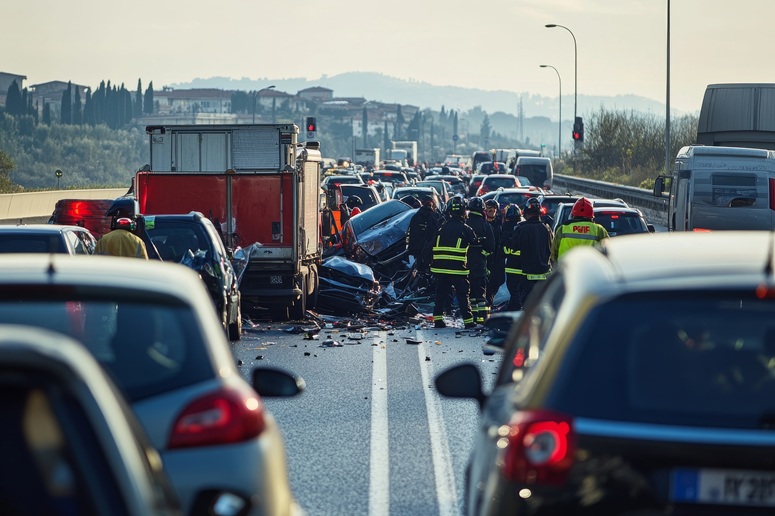
Multi-vehicle highway accidents in Fort Worth can cause serious injuries such as traumatic brain injuries, broken bones, spinal injuries, internal injuries, and severe soft tissue damage. You can be struck more than once as vehicles collide, increasing the force placed on the body. These crashes can occur on major highways...
Read ArticleTell us about your accident and your injuries. An injury lawyer from our team will call and provide you with a free evaluation of your case. If we can help, and you are unable to travel, we will come to your home, office, or hospital. It’s easy – let’s get started.

Email us anytime and we will get back to you.

Our attorneys will come to your home, office or hospital at your convenience.

Our team is ready and waiting to help you today.