Message Us
 Call Us
 Texas drivers are facing important updates in 2025, especially when it comes to vehicle inspection rules. If you’ve been in a car accident—or want to avoid one—the new inspection sticker changes could affect your safety and legal liability. At Anderson, Cummings & Drawhorn, LLP, we’re here to explain how these shifts may impact your responsibilities on the road and your rights after a crash.
Table of Contents
Vehicle Inspection Laws in Texas
Starting in 2025, Texas will roll out major changes to its vehicle inspection program. Under House Bill 3297 , most non-commercial vehicles will no longer need a safety inspection, according to the Texas Department of Public Safety. These updates could affect how liability is determined in car accidents, especially when poor vehicle maintenance plays a role.
Elimination of Safety Inspections
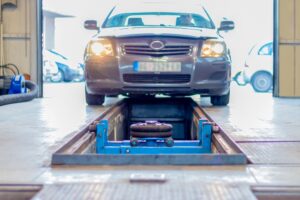
Beginning January 1, 2025, Texas will end annual safety inspections for most non-commercial vehicles. Outside of emissions requirements in some countries, owners can register their vehicles without passing a safety check.
While the change may seem convenient, you’re now fully responsible for your vehicle’s condition. If poor maintenance leads to a crash, it could still affect how fault is determined.
Inspection Program Replacement Fee
Although safety inspections are ending, the state will still charge a $7.50 inspection program replacement fee during registration. This fee helps fund ongoing road safety efforts, even though the inspection sticker is no longer required for most drivers.
While inspections are going away, the system behind them—including oversight—remains. Drivers are still financially responsible when registering a vehicle, and keeping it in safe condition is more important than ever.
Emissions Tests Still Required
Emissions testing will remain required in certain Texas counties. Although safety inspections are ending for most non-commercial vehicles, emissions rules continue in areas that have struggled with air quality concerns.
These tests help Texas meet federal environmental standards and are intended to reduce harmful pollutants, particularly in densely populated or high-traffic regions.
Counties Requiring Emissions Tests
If you live in one of the following 17 counties, you must still pass an emissions test before registering your car: Brazoria, Collin, Dallas, Denton, El Paso, Ellis, Fort Bend, Galveston, Harris, Johnson, Kaufman, Montgomery, Parker, Rockwall, Tarrant, Travis, and Williamson.
In these counties, the inspection sticker may be going away, but testing is still required. This matters, especially when buying or selling a vehicle or registering an out-of-county car in a metro area.
Commercial Vehicles
In Texas, all commercial vehicles must still pass annual safety inspections , regardless of county or emissions rules. This includes business-use vehicles, heavy-duty trucks, and fleets.
The Texas Department of Public Safety enforces these rules because commercial transport carries more risk: higher mileage, larger vehicles, and increased public exposure.
Noncompliance can result in fines, registration holds, legal penalties, or potential liability. Inspection records may become key evidence if a crash involves a poorly maintained vehicle.
Importance of Regular Maintenance
While mandatory safety inspections are ending, regular vehicle maintenance is more important than ever. The Texas Department of Public Safety urges drivers to keep vehicles in safe condition, even without inspections.
Without regular checks, issues like worn brakes or bald tires might go unnoticed—until they cause a serious problem. Neglecting maintenance can increase liability if your vehicle contributes to a crash. Courts often review vehicle condition in personal injury claims, and poor upkeep can leave drivers legally and financially exposed.
Vehicle Inspection Laws by State
Each U.S. state sets its own vehicle inspection standards. Some, like California, emphasize emissions testing, while others, like Florida, have few requirements. This inconsistency can be confusing—especially if you’ve moved to Texas or are buying a used vehicle. Knowing whether an inspection sticker is required can affect both registration and liability after a crash.
Why Do the Vehicle Inspection Laws by State Vary?
State inspection laws vary based on environment, population, infrastructure, and policy. In Texas, emissions testing remains vital in metro areas with air quality concerns, while rural counties face fewer restrictions.
Political views also shape oversight—some states emphasize personal responsibility, while others enforce stricter programs to reduce traffic fatalities.
Legally, these differences matter. After a crash involving an out-of-state vehicle, its condition may be judged by that state’s inspection rules.
Get Legal Help After a Car Accident Linked to Poor Vehicle Condition
At Anderson, Cummings & Drawhorn, LLP, we know how Texas’s changing inspection laws and the removal of the inspection sticker rule may affect your case. Whether you’re injured or answering a claim, your car’s condition can shape the legal outcome. Call 817-920-9000 to book a free consultation and let us evaluate your case. We’re here to help protect your rights and fight for the compensation you deserve.

This page has been written, edited, and reviewed by a team of legal writers following our comprehensive guidelines. This page was approved by attorney Seth Anderson, whose team has more than 50 years of combined legal experience in helping victims of personal injury seek justice.
Recent Blog Posts

Oilfield Contractors vs. Operators: Who Can Be Sued After an Accident?
After a Fort Worth oilfield accident, you may be able to sue the contractor, the operator, or another company. Still, liability depends on who controlled the work, who created the dangerous condition, and whose conduct caused your injury. At Anderson, Cummings & Drawhorn, we know how complex oilfield accidents can...
Read Article
Why Grocery Store Slip and Fall Accidents Are More Serious Than People Think
Grocery store slip and fall accidents are more serious than people think because they can cause serious injuries that may seem negligible at first. A sudden fall onto a hard floor can damage your head, spine, hips, joints, and other parts of your body, even when the fall initially looks...
Read Article
Common Injuries from Multi-Vehicle Accidents on Highways
Multi-vehicle highway accidents in Fort Worth can cause serious injuries such as traumatic brain injuries, broken bones, spinal injuries, internal injuries, and severe soft tissue damage. You can be struck more than once as vehicles collide, increasing the force placed on the body. These crashes can occur on major highways...
Read ArticleRequest a Free Case Evaluation
Tell us about your accident and your injuries. An injury lawyer from our team will call and provide you with a free evaluation of your case. If we can help, and you are unable to travel, we will come to your home, office, or hospital. It’s easy – let’s get started.


Email Us Anytime
Email us anytime and we will get back to you.

We’ll Come To You
Our attorneys will come to your home, office or hospital at your convenience.

Available 24/7
Our team is ready and waiting to help you today.