Message Us
 Call Us
 The right-of-way laws in Texas specify when drivers must yield to others. When these laws are broken, accidents with serious injuries can occur.
Table of Contents
Below, we highlight some of the main right-of-way laws to help protect pedestrians, bicyclists, other drivers and yourself while on the road in the Lone Star State.
At Anderson, Cummings & Drawhorn, LLP, our Fort Worth car accident attorneys work to protect the rights of accident victims. If you have been injured, we will investigate your claim and let you know if legal action could help you recover compensation for your injuries. Schedule a free, no obligation consultation today.
Call (817) 920-9000 so we can get started on your claim.

Intersections
At intersections, drivers must obey the right-of-way laws that apply to that type of intersection and situation, including the following:
- Unpaved Roads – Drivers on unpaved roads must yield the right-of-way to traffic on a paved road when coming to an intersection with a paved road.
- Uncontrolled Intersection – If there are no signs or signals at an intersection, yield to traffic already within the intersection. Proceed with caution.
- Making Turns – When turning left, yield to pedestrians crossing the street and traffic moving in the opposing lane. When turning right, yield to pedestrians crossing and the traffic within the lane you are turning into.
- Private Roads – At intersections to a main roadway from a private road, driveway or alley, traffic on the main road has the right-of-way.
- Railroad Crossings – At a railroad crossing, the train always has the right-of-way. Vehicles should stop at the stop line to avoid being hit by the moving train.
- End of Roadway – At an intersection at the end of a street that ends in a T, yield the right-of-way to traffic on the through street.
Please read: What Are the Most Dangerous Highways in Texas and Fort Worth?
Emergency Vehicles
Texas drivers must give emergency vehicles the right-of-way. When an ambulance, fire truck or police vehicle is running its lights and sirens, move to the right of the roadway as soon as possible. If you are within an intersection when an emergency vehicle approaches behind you, proceed through the intersection and move to the right of the road as soon as possible.
School Buses
Drivers must yield the right-of-way to school buses. Some of these key laws in Texas are the following:
- Always stop if you approach a bus with its lights on and stop arm out, from either direction.
- You may pass the bus once it has resumed motion, the lights are not flashing, or the bus driver has signaled you to proceed.
- You are not required to stop if you are on a controlled-access highway and the school bus is in a loading zone where pedestrians are not allowed to cross.
Penalties for Not Yielding Right-of-Way to a School Bus
Texas takes school bus safety seriously. Below are the possible penalties you may face if you fail to yield the right-of-way to a school bus:
- First offense: fines up to $1,250
- Two or more offenses: fines from $1,000 to $2,000, and possible driver’s license suspension
- Offense causing bodily injury: fines up to $4,000 and a possible jail sentence of up to one year
- Offense causing bodily injury with a previous conviction of the same violation: a felony with fines up to $10,000 and a possible jail sentence of 180 days to two years
Pedestrians
Drivers are responsible for watching out for pedestrians at all times, including in these circumstances:
- When the light is green, pedestrians have the right-of-way even if there are no “walk” signals.
- Pedestrians within the crosswalk still have the right-of-way if the traffic light turns red.
- Pedestrians should be given the right-of-way even if they are breaking the law, to preserve safety.
Stop Signs
At a stop sign in Texas, drivers are legally required to make a full stop at the marked stop line —or before entering a crosswalk or intersection if no line exists. Vehicles must proceed only when it is their turn and the way is clear.
- If multiple drivers reach the intersection simultaneously, yield to the vehicle on your right.
- At four-way stops, follow the order of arrival , even if that means waiting for other vehicles to go first. Failure to observe these rules can lead to crashes and liability in a personal injury claim, especially in car accident cases involving intersection collisions.
Yield Signs
Texas law mandates that drivers slow down and prepare to stop if necessary when approaching a yield sign. Yielding means more than just pausing; it requires you to allow other vehicles and pedestrians to proceed safely.
- If another vehicle is approaching from your left or is already in the intersection, you must allow it to pass before you move.
If merging into traffic, wait until you have a safe opening. Failure to yield appropriately can result in citations and civil fault in the event of a crash.
Yes , in Texas, it is generally legal to turn right at a red light, as long as there is no posted sign explicitly prohibiting the turn. Before proceeding, the driver must come to a complete stop , check for oncoming traffic and pedestrians , and only proceed when it is safe and lawful to do so. This rule, while straightforward, often becomes a central issue in car accident cases, particularly when there is a dispute over who had the right-of-way. If a driver fails to yield properly or rolls through the intersection, they could be found at fault for any resulting collision.
Complete Stop
You must come to a complete stop at the red light before attempting to turn right. Texas law requires this full stop—treating it the same as a stop sign—to ensure the driver has time to assess the intersection safely. Rolling through a red light is both illegal and dangerous , as it increases the likelihood of a collision. Law enforcement can issue citations for this violation, and in the event of a crash, it can significantly impact liability in a car accident case.
Yield Right-of-Way
You must yield to all pedestrians and vehicles with a green light or lawful presence in the intersection. This includes cyclists, emergency vehicles, or cars making U-turns legally.
No Prohibitive Sign
If a sign is posted that says “No Turn on Red,” you must obey it. Ignoring this restriction can lead to citations and expose you to liability in an accident claim.
Safety First
Even when legal, you should only turn right on red if the path is completely clear. Conditions like poor visibility, fast-moving traffic, or pedestrian presence should prompt extra caution.
- Always check both ways—some vehicles may turn left across your path.
Be especially cautious near schools or in heavy pedestrian zones, where local ordinances may impose stricter rules.
What Does Yield Mean in Driving? (new)
What does yield mean in driving? Yield means allowing another driver, pedestrian, or cyclist to proceed first when the law requires it. In Texas, the Texas Transportation Code §545.153 defines yielding as giving the right-of-way to another road user to avoid conflict or collision. For example, at intersections without signals, drivers entering must wait until traffic already on the road clears. As noted by the Texas Legislature, failing to follow this rule is a traffic violation with potential legal consequences.
How to Recognize and Follow Yield Signs in Texas
A yield sign alerts drivers to slow down and prepare to stop if necessary. These triangular red-and-white markers are used at merging lanes, freeway entrances, and intersections with limited visibility. To follow yield signs correctly:
- Reduce speed when approaching.
- Look for vehicles or pedestrians with the right-of-way.
- Stop completely if traffic or conditions require.
The Texas Department of Public Safety driver handbook emphasizes that ignoring yield signage increases crash risk.
When Texas Drivers Must Yield the Right-of-Way
Drivers in Texas must yield in several common scenarios. These include:
- Stop or yield at the signs when another vehicle is already in the intersection.
- When turning left across opposing traffic.
- To pedestrians crossing in marked or unmarked crosswalks.
- When entering from private driveways or alleys.
Each rule is codified under the Texas Transportation Code to maintain orderly traffic flow.
Penalties for Failing to Yield in Texas
Failing to yield can lead to fines, license points, or liability in civil claims. Citations may cost several hundred dollars, and when a collision results, the at-fault driver may face lawsuits for damages. Texas law treats failure-to-yield crashes seriously because they often involve pedestrians or multi-vehicle collisions.
How Anderson, Cummings & Drawhorn, LLP Can Help Texas Drivers
Do you have more questions about what yield means in driving? At Anderson, Cummings & Drawhorn, LLP, we review police reports, traffic statutes, and witness accounts to build strong claims. Our role is to pursue the recovery you deserve while you focus on healing. For immediate help, call us at (817) 920-9000.
Contact Our Lawyers Now
Following the right-of-way laws in Texas helps to preserve the safety of everyone on the road. When a right-of-way violation is a factor in an accident causing bodily injury, the at-fault driver may face fines of up to $10,000 and possible jail time.
At Anderson, Cummings & Drawhorn, LLP, our experienced injury lawyers will investigate your injury claim and determine whether right-of-way laws were broken, leading to the accident. We will fight to recover the compensation you deserve for medical bills, lost wages, and pain and suffering.
Schedule a free, no obligation consultation with our Fort Worth accident lawyers and learn what legal options may be available to you. We work on contingency, so you only pay us if we help you recover compensation.
If you are in Dallas, Fort Worth or Arlington, our car accident lawyers are ready to help. Call (817) 920-9000 or fill out our Free Case Evaluation form now.

This page has been written, edited, and reviewed by a team of legal writers following our comprehensive guidelines. This page was approved by attorney Seth Anderson, whose team has more than 50 years of combined legal experience in helping victims of personal injury seek justice.
Recent Blog Posts

Oilfield Contractors vs. Operators: Who Can Be Sued After an Accident?
After a Fort Worth oilfield accident, you may be able to sue the contractor, the operator, or another company. Still, liability depends on who controlled the work, who created the dangerous condition, and whose conduct caused your injury. At Anderson, Cummings & Drawhorn, we know how complex oilfield accidents can...
Read Article
Why Grocery Store Slip and Fall Accidents Are More Serious Than People Think
Grocery store slip and fall accidents are more serious than people think because they can cause serious injuries that may seem negligible at first. A sudden fall onto a hard floor can damage your head, spine, hips, joints, and other parts of your body, even when the fall initially looks...
Read Article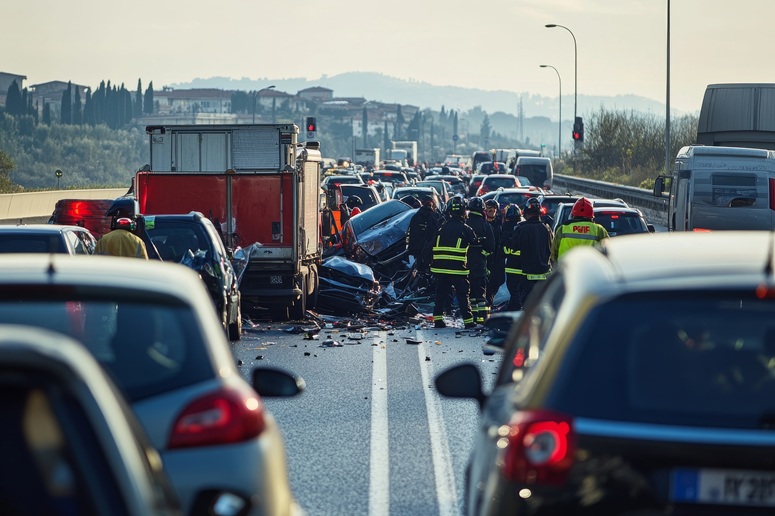
Common Injuries from Multi-Vehicle Accidents on Highways
Multi-vehicle highway accidents in Fort Worth can cause serious injuries such as traumatic brain injuries, broken bones, spinal injuries, internal injuries, and severe soft tissue damage. You can be struck more than once as vehicles collide, increasing the force placed on the body. These crashes can occur on major highways...
Read ArticleRequest a Free Case Evaluation
Tell us about your accident and your injuries. An injury lawyer from our team will call and provide you with a free evaluation of your case. If we can help, and you are unable to travel, we will come to your home, office, or hospital. It’s easy – let’s get started.


Email Us Anytime
Email us anytime and we will get back to you.

We’ll Come To You
Our attorneys will come to your home, office or hospital at your convenience.

Available 24/7
Our team is ready and waiting to help you today.