Message Us
 Call Us
 Speeding in Texas: Can You Get Away With 10 Over the Posted Limit?
By Anderson, Cummings & Drawhorn, LLP on September 17, 2024
By Anderson, Cummings & Drawhorn, LLP on September 17, 2024
Drivers in every state are required by law to adhere to the posted speed limits. That said, most people think going a little over the speed limit is okay. In Texas, however, if you drive even 10 miles over the posted limit, you can expect fines and other penalties.
Table of Contents
If you or a loved one was involved in a car crash, our Fort Worth car accident lawyers are ready to help. We offer a free, no-risk consultation to help determine your potential legal options.
Call for a FREE case review with a qualified lawyer: (877) 920-9000.
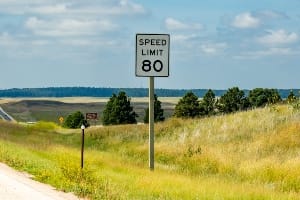
In Texas, the speed limit varies depending on the type of road you are on as well as where you are driving. Below are some road types and the standard posted limits in Texas.
Texas drivers are required by law to follow the posted speed limits. Even going a little over the limit could land you a ticket and other penalties. Even going 10 miles per hour over the speed limit could be seen as a clear violation.
In short, Texas law enforcement does not condone or ignore speeding, even for drivers going just 10 mph over the limit. That said, we all know that enforcement practices may sometimes be different from the black and white stated law. Largely, this is because:
Yes, you can absolutely be ticketed for driving 10 mph or more over the speed limit in Texas. The consequences can be significant:
Speeding in Texas is a Class C misdemeanor. Drivers going 25 or more over the posted limit could also face criminal charges if they try to outrun an officer who is trying to pull them over. Additional consequences for speeding in Texas may include:
Drivers may think they can speed safely for a number of reasons. Often they justify their actions for various psychological factors, as well as a misunderstanding of road safety. Unfortunately, this is a dangerous mindset that leads to riskier driving behaviors and a greater chance of causing serious harm in a crash. These are some of the reasons people rationalize speeding or think they can speed safely.
Having confidence is great in many situations. However, as a driver, being overconfident can be deadly. Many drivers overestimate their abilities behind the wheel, believing they can handle higher speeds safely. Speeding can quickly cause you to lose control of your vehicle, especially in bad weather situations or when driving too close to other vehicles in heavier traffic.
Drivers, especially those who are less experienced, have not had enough time behind the wheel to fully grasp the risk they are taking when they ignore the speed limits. Underestimating the risks associated with speeding can lead to catastrophic single or multi-vehicle crashes.
Perceived time constraints often push drivers to speed, prioritizing punctuality over safety.
The perception that “everyone else is speeding” can normalize the behavior, encouraging more drivers to follow suit.
Some drivers believe speed limits are set artificially low, leading them to disregard posted limits.
A safe speed to drive your car is one at which you can stop safely within the distance you can clearly see ahead, often referred to as the “limit point”—and where you remain fully in control of your vehicle. It’s not simply about obeying posted speed limits; it’s about adapting your speed to match conditions such as visibility, traffic, road surface, and the condition of your car. By recognizing these factors, Texas drivers can reduce their risk of collisions and serious injury.
Weather, visibility, and road surface all play critical roles in determining a safe driving speed. Wet, icy, or foggy conditions demand slower speeds, even if the posted limit remains unchanged. According to the Texas Department of Transportation, reducing speed in hazardous conditions greatly decreases your chances of being involved in a crash.
Key adjustments for conditions:
The “limit point” is the furthest spot on the road you can clearly see. As you approach bends or hills, your limit point naturally decreases. Slow down so that you can safely stop within that visible area. On winding Texas roads, especially rural routes, maintaining this margin can mean the difference between avoiding an obstacle and causing a crash.
Your vehicle’s ability to respond depends heavily on its maintenance. If your brakes, tires, or suspension are worn, your stopping distance increases. For example:
Ensure your vehicle is routinely serviced and road-ready.
A key component of safe driving speed is harmonizing with the flow of traffic without tailgating or abrupt lane changes. Monitor vehicles ahead, to the sides, and behind to maintain safe spacing and adjust accordingly.
Tips for navigating traffic:
Posted speed limits represent maximum thresholds under ideal conditions, not a guarantee of safety. Texas Transportation Code § 545.351 affirms that drivers must adjust speeds to match road and traffic conditions.
Exceeding safe speeds reduces your reaction time and increases crash severity. Studies show that even minor increases over the limit significantly raise the likelihood of fatal injuries in accidents. Stay within a speed that allows for quick and controlled responses.
Constant vigilance behind the wheel allows for early recognition of hazards, road signs, and erratic drivers. Safe speed is only meaningful when paired with alertness. Avoid distractions like:
Safe driving isn’t passive—it’s a skill. Get familiar with your vehicle’s unique handling characteristics. Know how it accelerates, brakes, and corners. Practice emergency braking and evasive maneuvers in safe environments like driver training courses or empty parking lots.
Injured by a speeding driver in Texas? Call Anderson, Cummings & Drawhorn, LLP to discuss your situation and learn about your potential legal options.
After a Fort Worth car accident, there is no reason for you to have to deal with the insurance company on your own. Our firm has the experience, knowledge and resources to help you fight for the compensation you deserve.
Deadlines apply, so be sure to speak to an attorney sooner than later. Your initial consultation is completely free, and if we represent you there are no upfront costs. We only get paid if you do.
Anderson, Cummings & Drawhorn, LLP. We get results for you. (817) 920-9000.

This page has been written, edited, and reviewed by a team of legal writers following our comprehensive guidelines. This page was approved by attorney Seth Anderson, whose team has more than 50 years of combined legal experience in helping victims of personal injury seek justice.
After a Fort Worth oilfield accident, you may be able to sue the contractor, the operator, or another company. Still, liability depends on who controlled the work, who created the dangerous condition, and whose conduct caused your injury. At Anderson, Cummings & Drawhorn, we know how complex oilfield accidents can...
Read Article
Grocery store slip and fall accidents are more serious than people think because they can cause serious injuries that may seem negligible at first. A sudden fall onto a hard floor can damage your head, spine, hips, joints, and other parts of your body, even when the fall initially looks...
Read Article
Multi-vehicle highway accidents in Fort Worth can cause serious injuries such as traumatic brain injuries, broken bones, spinal injuries, internal injuries, and severe soft tissue damage. You can be struck more than once as vehicles collide, increasing the force placed on the body. These crashes can occur on major highways...
Read ArticleTell us about your accident and your injuries. An injury lawyer from our team will call and provide you with a free evaluation of your case. If we can help, and you are unable to travel, we will come to your home, office, or hospital. It’s easy – let’s get started.

Email us anytime and we will get back to you.

Our attorneys will come to your home, office or hospital at your convenience.

Our team is ready and waiting to help you today.