Message Us
 Call Us
 Learn About Safe Boating Before Memorial Day Weekend
By Anderson, Cummings & Drawhorn, LLP on May 22, 2017
By Anderson, Cummings & Drawhorn, LLP on May 22, 2017
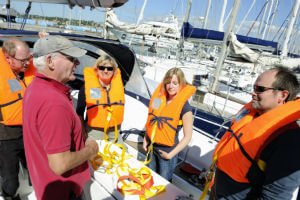
On Friday, President Donald Trump designated the week of May 21 through May 27 as National Safe Boating Week. All week long, the U.S. Coast Guard and its federal, state and local partners will encourage boaters to take safety precautions to avoid accidents that could cause injury or death.
Table of Contents
The president’s proclamation encourages all Americans to observe National Safe Boating Week by learning more about staying safe while boating and taking advantage of opportunities for boating safety education.
This is particularly important in places like Texas, where boating is a popular leisure activity and many people will be hitting the water this Memorial Day weekend.
The Texas Parks and Wildlife Department (TPWD) has several tips to help prevent boating accidents and keep boating occupants safe if an accident occurs.
According to the TPWD, 85 percent of people who drown in boating accidents are not wearing life jackets, also known as personal flotation devices (PFDs).
The TPWD website has a page on the five types of life jackets, their advantages and disadvantages, and the situations where it is best to use each type.
Any boat less than 16 feet long must have a Type I, Type II, Type III or Type V PFD for each person on board the vessel, according to the Texas Water Safety Act. It is also advisable to carry extra life jackets in child and adult sizes.
Vessels more than 16 feet long must meet this requirement and have a Type IV throwable PFD that is readily accessible. However, canoes that are more than 16 feet long are exempt from the requirement to have a Type IV PFD.
While wearing a PFD is not a legal requirement for adults, it is for children 12 years old and younger who are on vessels under 26 feet in length. These children have to wear a PFD that is approved by the U.S. Coast Guard.
Operating a boat while under the influence of alcohol is just as dangerous as drinking and driving. It greatly increases your risk of being involved in an accident that could cause you and others severe injury or death.
Like drinking and driving, boating while intoxicated (BWI) is also illegal and carries penalties similar to a drunk driving offense:
Open containers are legal on boats but all boat occupants may be subject to public intoxication laws. Under this section of the Texas penal code, it is illegal to appear drunk in public to a degree that you may endanger yourself or others.
You should always stay close to children and keep your eyes on them because it only takes a second for a child to fall off a boat and go underwater. Drowning is the number two cause of accidental death in children.
Formal swimming lessons are a great way to reduce the risk of drowning if you go overboard while boating. Lessons will help you feel more comfortable in the water and give you the skills to stay afloat and keep your head above water.
In addition to PFDs, all boats must have a variety of other equipment to help ensure the safety of everyone on board, along with the safety of people on other vessels on the water at the same time. The type of equipment and location is explained in a quick reference chart on page two of the TPWD’s guide to the Water Safety Act.
Required equipment includes:
Motorboats less than 12 meters long must have a sound-producing device, such as a whistle or horn, to make other vessels aware of the motorboat when there is reduced visibility.
Motorboats longer than 12 meters must have a whistle or horn and a bell.
Every type of watercraft, when it is not docked, is required to have and use a bright light, lantern or flashlight from sunset to sunrise during periods of restricted visibility.
There are different requirements for navigation lights on different types of vessels.
Any boat towing a person, such as a water skier, must have an observer who is 13 years of age or older. If there is no observer, the boat must have a rearview mirror that is no less than four inches from top to bottom and from one side to the other.
Motorboats are required to carry fire extinguishers if they have any of the following features:
Boats must also be equipped with the following:
When you are out on the water, there are several things you can do to help keep yourself and others safe:
Enrolling in a boater education course is a smart idea for anyone who will be boating, not just operators.
The state of Texas requires the following persons to take a boater education course certified by the TPWD:
BoaterExam.com and Boat-ed.com offer TWPD-certified courses for just $20. You can also take the BoatUS Foundations’ Texas Boating course that is approved by the National Association of State Boating Law Administrations (NASBLA). This consists of six lessons and a final exam and the entire program is free.
If you suffer an injury or lose a loved one in a boating accident this Memorial Day weekend, contact Anderson, Cummings & Drawhorn, LLP for a free case evaluation.
Our Fort Worth personal injury lawyers may be able to file a lawsuit to recover fair compensation for the damages you have suffered.
Call (817) 920-9000 or fill out a Free Case Evaluation form right now.

This page has been written, edited, and reviewed by a team of legal writers following our comprehensive guidelines. This page was approved by attorney Seth Anderson, whose team has more than 50 years of combined legal experience in helping victims of personal injury seek justice.

After a Fort Worth oilfield accident, you may be able to sue the contractor, the operator, or another company. Still, liability depends on who controlled the work, who created the dangerous condition, and whose conduct caused your injury. At Anderson, Cummings & Drawhorn, we know how complex oilfield accidents can...
Read Article
Grocery store slip and fall accidents are more serious than people think because they can cause serious injuries that may seem negligible at first. A sudden fall onto a hard floor can damage your head, spine, hips, joints, and other parts of your body, even when the fall initially looks...
Read Article
Multi-vehicle highway accidents in Fort Worth can cause serious injuries such as traumatic brain injuries, broken bones, spinal injuries, internal injuries, and severe soft tissue damage. You can be struck more than once as vehicles collide, increasing the force placed on the body. These crashes can occur on major highways...
Read ArticleTell us about your accident and your injuries. An injury lawyer from our team will call and provide you with a free evaluation of your case. If we can help, and you are unable to travel, we will come to your home, office, or hospital. It’s easy – let’s get started.

Email us anytime and we will get back to you.

Our attorneys will come to your home, office or hospital at your convenience.

Our team is ready and waiting to help you today.